For anyone standing in a selection room with a price list a few days after a death, deciding what to sign for
Buying the casket somewhere else? What a careful reader checks before it ships
A funeral provider may not add a receiving, handling or casket service charge when a family supplies a container purchased elsewhere. The fee is barred outright, not merely required to be disclosed.
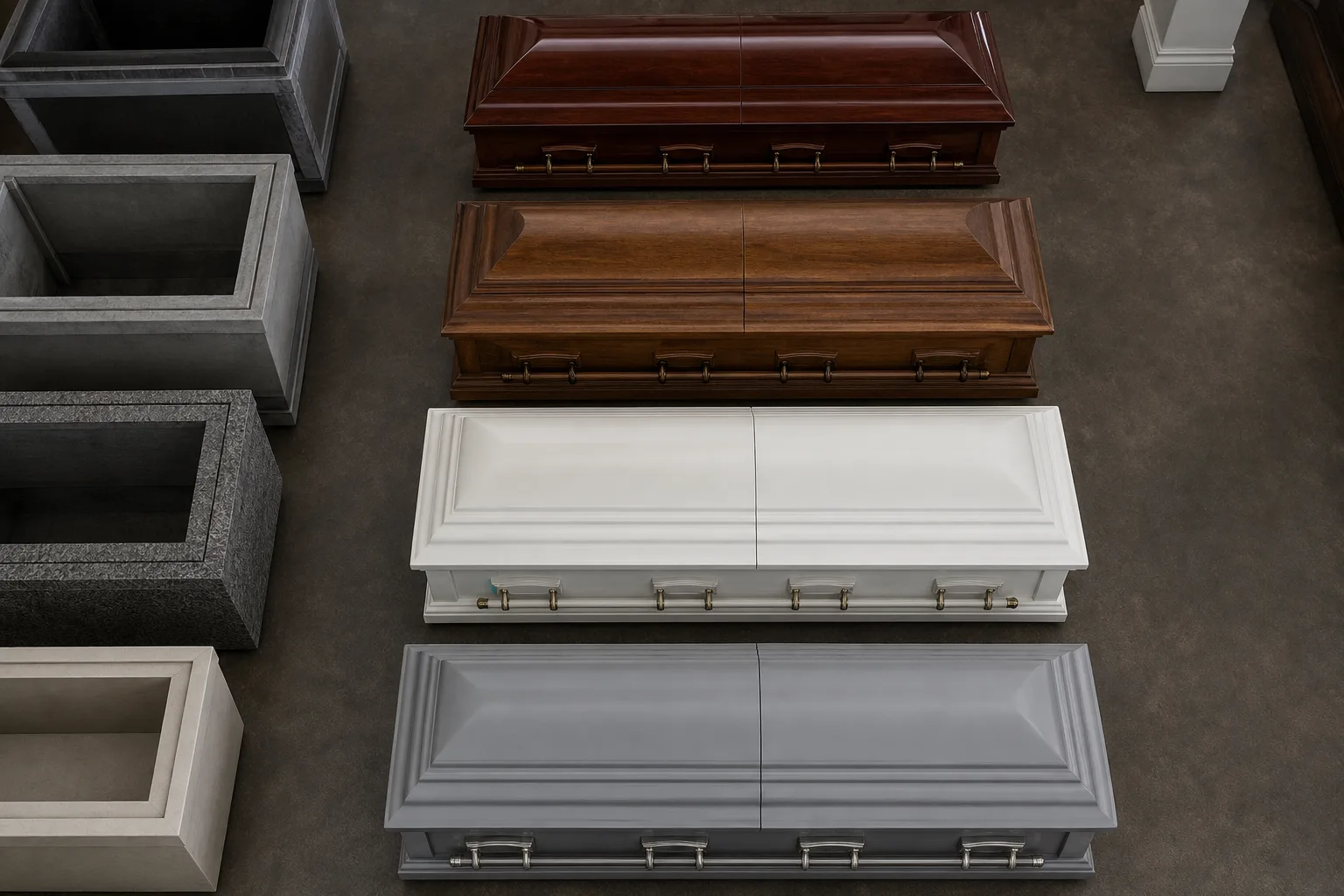
A casket bought from someone other than the funeral home arrives on a truck, usually in a corrugated carton, usually on a weekday morning, and usually with a name on the paperwork that nobody in the arrangement conference has met. That is the whole transaction. The funeral home receives it, moves it inside, and uses it for the services the family selected, and it may not charge a separate fee for doing so. Understanding what varies among the sellers, and what does not vary at all, is most of the work.
The rule that makes the comparison possible
The Funeral Rule, enforced by the Federal Trade Commission, which oversees funeral industry disclosure practices nationally, bars a provider from charging a handling, receiving or casket service fee when a family supplies a casket obtained elsewhere. It also bars conditioning any other service on buying the casket in-house, and it bars refusing to use the container that arrives. The practical effect is that the price of the box and the price of the services are two separate questions, and a family can answer them separately, with different sellers, on different days.
What the rule does not do is oblige a funeral home to store a casket for weeks, to inspect it for damage on the family's behalf, or to accept delivery at an hour nobody is on site. Those are practice, not law, and they vary by firm. A careful reader asks in advance about the receiving window, about who signs for the shipment, and about what happens if the lid arrives dented. The answers are ordinary logistics, and most firms give them readily.
Online sellers, casket stores and the warehouse behind both
The large online sellers and the standalone casket showrooms that operate near hospitals and cemeteries in many metropolitan areas typically buy from the same handful of manufacturers that supply funeral homes, or from importers who build to comparable specifications. Turnaround is the differentiator. An online seller working from a regional warehouse can often deliver next-day; one shipping cross-country cannot. Before ordering, the useful checks are the shipping guarantee in writing, the return and damage policy, whether the quoted price includes freight and residential-style delivery, and whether the seller has ever shipped to that particular funeral home before.
Specification language repays attention here, because it is where identical-looking listings separate. Gauge for steel, species and whether the wood is solid or veneered, interior fabric, and the presence or absence of a rubber gasket all appear in the product description, and all move the price. A photograph shows none of them. Two listings a few hundred dollars apart may differ by twenty-gauge versus eighteen-gauge steel, which is a real difference in material, or by nothing more than the embroidery on the cap panel.
Cabinetmakers, monasteries and plain unfinished boxes
A local cabinetmaker or a monastic woodshop occupies a different position: the container is built rather than stocked, often in pine, poplar or oak, often with rope handles and a simple lid, and often without any metal fastener at all. Lead time is the constraint, since a build measured in days does not suit a service scheduled for Saturday, though many shops keep finished stock for exactly that reason. Green burial grounds frequently require this kind of construction, and a shop that regularly supplies one will know the specific ground's requirements without being asked twice.
Dimensions matter more with a built container than a catalogued one. The exterior width and length have to clear the cemetery's outer burial vault if one is required, and have to fit the lowering device the cemetery uses. A careful reader gets the interior and exterior measurements from the maker in inches, then reads them back to the cemetery office and to the funeral home before the wood is cut. Weight is worth confirming too, because a solid hardwood box with six pallbearers is a different proposition from a pine one.
What the funeral home's price list still tells you
Even when the casket comes from elsewhere, the general price list governs everything else, and it remains the document to read line by line. The basic services fee, transfer of remains, embalming or refrigeration, use of facilities, and the hearse are all priced independently of the container. Comparing an in-house casket to an outside one means comparing the casket prices alone, since the rest of the bill should not move. If a quoted total shifts when the casket source changes, that difference deserves a direct question and a written answer.
The families who do this well tend to make two phone calls before placing any order: one to the cemetery, for container requirements and dimensions, and one to the funeral home, for the receiving window. Everything after that is a purchase like any other.